
Gears and couplings · Germany
Gears and couplings manufacturers in Germany
5 researched profiles for gears and couplings in germany. Featured suppliers include STÖBER, WITTENSTEIN, Harmonic Drive.
5
Researched profiles
1
Country
33+
Products listed
6
Buyer questions
🇩🇪 Market context
Germany
Germany is the centre of European industrial manufacturing, with the densest concentration of automation OEMs, sensor manufacturers, drives specialists, and Mittelstand component suppliers in the region. The DACH industrial belt accounts for roughly 40% of the European supplier base in this directory, with particular strength in drives, sensors, vision systems, fluid power, and machine controls. German suppliers are typically engineering-led, with deep technical sales support, long product-lifecycle commitments (10+ years post-discontinuation is common), and strong distributor networks across Europe. Hannover Messe and SPS Nuremberg anchor the European trade-fair calendar, and the Mittelstand depth in Baden-Württemberg, Bavaria, and North Rhine-Westphalia means most niche industrial categories have a German specialist supplier with global market share. Siemens, Bosch, Festo, KUKA, Phoenix Contact, Pepperl+Fuchs, Sick AG, and Turck are headquartered here. Functional safety, EMC certification rigour, and TÜV documentation standards are typically higher than the European average.
Market strengths
Key hubs: Stuttgart · Munich · Nuremberg · Hamburg
Category overview
Gears & Couplings
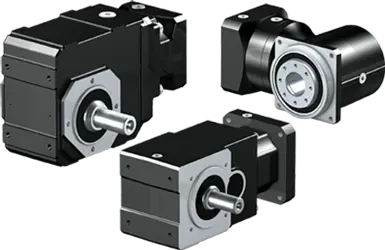
Industrial gear technology spans helical, bevel, and worm gearboxes, planetary and cycloidal reducers, harmonic-drive (strain-wave) gearsets, gear couplings, rack-and-pinion sets, and custom-cut gear wheels for OEM machine builders. The European gearing industry is heavily concentrated in Germany and northern Italy, where clusters of specialist manufacturers serve the machine-tool, wind-energy, marine, and mining sectors. Planetary gearboxes in the 10-to-5000 Nm output-torque range dominate servo-motor coupling in automation, driven by their high power density and compatibility with standard IEC motor flanges. Harmonic-drive reducers are standard in collaborative robot wrist joints and semiconductor wafer-handling equipment, where zero-backlash and high reduction ratios (up to 160:1 in a single stage) are required. ISO 1328 defines gear accuracy grades, and gear quality grade 5 or better is typically specified for servo-driven positioning axes to minimise positioning error from pitch deviation. AGMA 2101-D04 is frequently cited alongside ISO standards in export projects to North America. Wind-turbine main gearboxes represent the highest-torque segment of the European gear market, and manufacturers such as Renk, Flender (Siemens), and ZF dominate through proprietary surface-hardening and case-carburising processes that determine gear life under variable wind-load fatigue cycles.
Key technologies
Typical use cases
Suppliers
5 suppliers match
5 suppliers



Buyer's guide
What to evaluate when sourcing industrial gearboxes and gearing
Gear quality grade and accuracy class
Specify gear quality to ISO 1328 accuracy grades appropriate to your application: grades 5-6 are standard for general power transmission; grades 3-4 are required for positioning axes where tooth pitch error contributes to positioning repeatability. Ask for the quality grade on the test certificate, not the catalogue claim, and confirm whether the grade applies to the finished assembly or individual gear elements.
Backlash specification by application type
Distinguish between backlash requirements for positioning applications (typically below 3 arcmin for servo gearboxes) and power transmission gearboxes where controlled backlash prevents interference. Planetary gearboxes marketed as "low backlash" vary widely: confirm the published figure is measured at the output shaft under rated load, not at zero load. Some suppliers quote no-load backlash figures that double under operating torque.
Input shaft and motor flange compatibility
Confirm the gearbox input is machined to the relevant IEC motor flange standard (B5 or B14 foot mount) and that the shaft bore and keyway match your motor's shaft diameter and tolerance class. Adapter flanges introduce additional compliance and potential misalignment. For servo gearboxes, confirm the torsional stiffness figure (Nm/arcmin) is sufficient to avoid resonance within your servo bandwidth.
Service factor and duty cycle rating
Apply the correct service factor from the supplier's application data, accounting for shock loading, daily operating hours, and start-stop frequency. A gearbox rated for 10 kNm continuous torque may have a service factor of 1.25 for 24/7 operation with moderate shock, reducing the effective application rating to 8 kNm. Ignoring service factors is a leading cause of premature gear and bearing failure.
Lubrication scheme and maintenance interval
Sealed-for-life gearboxes eliminate scheduled lubrication but impose a thermal and speed limit above which oil degradation occurs prematurely. For high-speed or high-ambient-temperature applications, confirm the oil change interval and the accessibility of drain and fill plugs in your installation orientation. Some gearboxes are orientation-sensitive; operating a standard unit vertically without an orientation-specific oil fill level can void the warranty.
More in this country
Other categories of suppliers in Germany
FAQ
Common questions
How many Gears and couplings in Germany suppliers are in this directory?
5 publicly researched profiles match this listing. Profiles span gears & couplings.
Where are most Gears and couplings in Germany suppliers located?
Major hubs include Bremen (1), Hamburg (1), Igersheim (1), and Limburg an der Lahn (1). The directory tracks public headquarters for each supplier.
Which technologies do these suppliers commonly support?
Frequently listed technologies across these profiles include Compact high-ratio gear reduction (up to 320:1), Custom gear unit design and manufacturing, Helical and helical-bevel gear engineering, Helical rack and pinion with electronic synchronization, High-precision planetary gear design, and High-torque-density gear design. Coverage varies by supplier; see individual profiles for the full set.
Which industries do these suppliers serve?
The most common industries served are Food & Beverage, Machine Tools, Packaging, Automotive, and Energy. Each profile lists the full set of industries the supplier serves.
What certifications and quality standards do these suppliers hold?
Common certifications across these profiles include SIL 2 (selected) and SIL 3 (drives). Certifications are sourced from each supplier's public materials.
How are these supplier profiles created?
Profiles are built from publicly available company, product, and exhibitor data. No supplier pays to be listed; placement is based on data quality and completeness, not commercial relationships.
For suppliers
Want your company listed under Gears & Couplings – Germany?
Suggest your company for the directory. Inclusion is free and based on data quality, not payment.